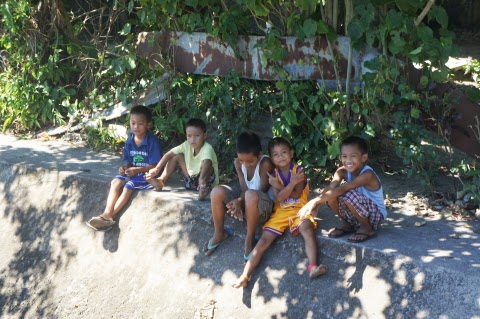
| Dancalan Beach, June 4, 2013 Photos: Alma P. Gamil Bulusan, Sorsogon, Philippines |
Wednesday, June 5, 2013
Young boy and the sea
Sunday, May 26, 2013
Agoho and Bulusan Volcano
"The mountain agoho (Casuarina rumphiana), which is known to
have a very limited distribution in the Philippines and Southeast Asia,
inhabits this protected area," reads part of the assessment report re BVNP of the team of Errol Gatumbato a noted environmentalist in the Philippines. By protected area, this refers to BVNP, Bulusan Volcano Natural Park located in the composite mountains of Bulusan Volcano (above and below photos).
Some of these trees found its way in the lower areas of Bulusan comprising the residential areas. I have seen one big agoho at the churchyard and several at the cottage grounds of Dancalan beach where this photo was taken. The dangling leaves that fringe the upper frame of the above photo are from an old agoho tree standing beside the open cottages in Dancalan beach. The electric wires along the road run across the photo from this vantage point.
Photos: Alma P. Gamil
Bulusan, Sorsogon, Philippines
Some of these trees found its way in the lower areas of Bulusan comprising the residential areas. I have seen one big agoho at the churchyard and several at the cottage grounds of Dancalan beach where this photo was taken. The dangling leaves that fringe the upper frame of the above photo are from an old agoho tree standing beside the open cottages in Dancalan beach. The electric wires along the road run across the photo from this vantage point.
![]() |
| Bulusan Volcano (composite mountains) as it appears on a cloudless day, May 26, 2013. |
Bulusan, Sorsogon, Philippines
Labels:
agoho,
Asia,
Bicol region,
biodiversity,
Bulusan,
Bulusan flora,
Bulusan Sorsogon,
Bulusan Volcano,
Bulusan Volcano Natural Park,
BVNP,
ecotourism,
Mt. Bulusan,
Philippines,
Southeast Asia,
tourism,
travel,
trees
Friday, May 24, 2013
Summer Play Station
Some things never change in my hometown. Even the entry of the internet and cable tv can't change this. Local boys just want to have fun in their innate ways. This time, I witness a new generation of local boys enjoying the age old summer fun in the river. Surprisingly, they are not flocking to the nearest internet computer game station! They rather spend the summer at the original playstation - the river underneath Sabang bridge.
| Simply referred to as 'tulay' by the locals meaning bridge. |
| As usual, wherever I go, kids just love to pose for the camera. |
| Bystanders sit by the river wall while the others show off their diving and swimming skills. |
| The swimming station also doubles as parking lot for the local banca (wooden boats). |
| Swimming with their own free style. No tutor needed. |
| Jump frog style. |
| Having a swell day for sure with or without the camera. |
Friday, May 17, 2013
Enchanted and enchanting Miligabiga
Miligabiga is a photographer's delight not only because its beauty is magnetic but because you can only savor this breathtaking seascape after passing through a series of beaches with varied traits of its own. Traversing this seemingly long stretch of kaleidoscope beaches is like undergoing a mini fairy tale story of finding the coveted treasure at the end of the journey.
Getting there (to Miligabiga beach) one will pass through to a long stretch of around four kinds of beaches : black sand, pebble beach, rock beach and finally the cream grey hue of the fine sand of Miligabiga. The boundaries of the beaches are delineated by the kind of beach description it has. For example the rock and pebbled beach is Riroan beach, the black sand beach is Katorse Puno while the final beach at the far end is Miligabiga.
Miligabiga is a seascape that will hold you by the edge of your senses. It is a visual feast alright but the sound of the ocean also vies for attention. The acoustic ecology here is just awesome. You can feel that the ocean is alive and intense even on a calm day with its oceanic wailings and breathing that reverberates infinitely in the entire seascape. The waves too are always dancing passionately inviting the most adventurous of surfers. The fear factor though of not going back safely to shore was on my mind. Not for beginners I said to myself while observing the series of waves with full bodied crest crashing on the edge of the beach and back again to the deep blue.
Miligabiga is at the far end of the sea coast of Barangay Mabuhay bordering Barangay San Bernardo of the Municipality of Bulusan. The vast Pacific Ocean provides an awesome backdrop to the picturesque seascape.
Photo and Video by Alma P. Gamil
Bulusan, Sorsogon
Philippines
Labels:
Asia,
Barangay Mabuhay,
beach,
beach hiking,
Bicol region,
Bulusan,
Bulusan Sorsogon,
Bulusan tourism,
Miligabiga,
Pacific Ocean,
Philippines,
seascape,
Southeast Asia,
tourism,
travel
Location:
Bulusan, Philippines
Sunday, May 5, 2013
Allegory for the Geothermal Question in Mt. Bulusan
| A forest in a mountain village in Bulusan. |
The Wind, One Brilliant Day
The wind, one brilliant day, called
to my soul with an odor of jasmine.
'In return for the odor of my jasmine,
I'd like all the odor of your roses.'
'I have no roses; all the flowers
in my garden are dead.'
'Well then, I'll take the withered petals
and the yellow leaves and the waters of the fountain.'
the wind left. And I wept. And I said to myself:
'What have you done with the garden that was entrusted to you?'
~ Antonio Machado
Photo by Alma P. Gamil
Santa Barbara, Bulusan, Sorsogon
Philippines
Labels:
Asia,
biodiversity conservation,
Bulusan,
Bulusan Sorsogon,
ecology,
environmental conservation,
forest,
Geothermal,
mountain village,
Mt. Bulusan,
nature,
nature conservation,
Philippines,
Southeast Asia
Location:
Bulusan, Philippines
Thursday, May 2, 2013
What saved the abaca of Odikin?
| Recent photos (above and below) of healthy abaca plants almost as big as the average banana thriving disease-free in the mountain village of Odikin (Santa Barbara) along the slopes of Mount Bulusan. |
While researches and government funded programs are still on-going as of this writing in a bid to rehabilitate the abaca industry which was almost wiped out in the Bicol Region because of the dreaded bunchy top virus (scientific researches already include cloning of abaca accessions resistant to the disease to searching for a local variety that can be proven immune to the bunchy top virus), here comes these well, very healthy looking abaca crops (photos) greeting me in my mountain stroll early week of April.
I was expecting an almost annihilated abaca population based on my several readings on the subject. So this comes as a surprise! Is the abaca 'variety'of Odikin and neighboring mountain villages resistant to the virus? Is the local accession growing here has the genetic make-up to ward off the disease?
My main guess is that these abaca crops were shielded by the ecosystem itself. Odikin's rich biodiversity creates a natural form of protection not unlike to a healthy body that wards off diseases and infections. Observing the assorted crops and wild flora growing side by side where these abaca also thrive one could safely conclude that the seemingly forested farms provide a natural check and balance of pests and diseases. The long held principle being espoused by the natural farming system that nature has a built-in healing and protection mechanism that controls and prevents the spread of pests and diseases among plants seems to work here. Nature heals itself as long as the ecosystem remains healthy.
This observation however calls on abaca research institutions to check on these local 'resistant' abaca crops in the village of Odikin. A thorough study on why they were saved from the destructive abaca disease perhaps will contribute much to update abaca cultivation practices. A scientific documentation will be most helpful.
Abaca in the form of Manila hemp locally referred to as 'bandala' was one of the major agricultural products of Bulusan next only to coconut. The state of abaca farming in Bulusan were discussed in several posts in Pamughaton, a Bulusanon web site as follows: Industriya sa bakilid, Halayhayan and Namandala. These posts echo the sad reality of Bulusan's abaca farmers and the parahag-ot i.e. abaca strippers.
FIDA (Fiber Industry Development Authority of the Department of Agriculture) released information on abaca's agricultural history reads: "The abaca plant is indigenous to the Philippines whose warm, wet climate and volcanic soils are particularly suited to its cultivation. It has been grown in the Philippines for centuries, long before the Spanish occupation. When Magellan and his companions arrived in Cebu in 1521, they noticed that the natives were wearing clothes made from the fiber of abaca plant, noting further that the weaving of the fiber was already widespread in the island."
Photos by Alma P. Gamil
in Santa Barbara, Bulusan, Sorsogon
Philippines
FIDA (Fiber Industry Development Authority of the Department of Agriculture) released information on abaca's agricultural history reads: "The abaca plant is indigenous to the Philippines whose warm, wet climate and volcanic soils are particularly suited to its cultivation. It has been grown in the Philippines for centuries, long before the Spanish occupation. When Magellan and his companions arrived in Cebu in 1521, they noticed that the natives were wearing clothes made from the fiber of abaca plant, noting further that the weaving of the fiber was already widespread in the island."
Photos by Alma P. Gamil
in Santa Barbara, Bulusan, Sorsogon
Philippines
Thursday, April 25, 2013
Palogtoc Falls back to nature
| The true 'green' mower for this expanse is the ever reliable Philippine carabao that keeps this coconut farm patch always freshly trimmed and neat looking. |
| Thumbs up for the carabao - a perfect bio-grass mower. This local grass species that the carabao grazes on is called (what else?) - carabao grass. |
| Local villagers from the vicinity of Palogtoc Falls enjoy free plunge and bath according to a local teen - at least for now. We however paid 25pesos each as entrance fee. |
| The local villagers know exactly how to frolic with the waters of Palogtoc Falls. |
| A long and shaded journey of a gushing mountain stream manifests itself into a beauty here in Palogtoc falls. The waters still carry the taste of subtle mineral waters. |
| Embracing the front and sides of Palogtoc Falls are brooks and rivulets which are captivating on their own. |
| The brook fronting the Palogtoc Falls sings a melodious water sound complementing the louder sound of the rushing voice of the water falls. |
Palogtoc Falls was actually a third choice for a Sunday picnic destination for three visiting nieces for the summer break. Fulo Resort and Masacrot Spring were overflowing with visitors so as to make us turn our gears to Palogtoc. The headtrail of Palogtoc that starts along the road needs a walk of around 500 meters, enough to discourage those that flocked to the other pools along the road.
We found out however, that the 500m walk to the lovely nature grotto that is Palogtoc is worth the extra walk not to mention the sights near the end of the trail - a green-always-freshly grazed carabao grass expanse under a coconut farm patch courtesy of a mainstay carabao mower. The trail has no signage as to where we are going.
The only sign that gave as the clue that we are nearing Palogtoc Falls is the sound of the rushing waters that becomes louder and louder as we are nearing the Falls and makes one imagine in advance what to expect - fresh and abundant flow of mountain spring that converge into a big stout water falls. Short water falls actually since the rest of it is hidden. The water falls that is visible at the big 'gorgeous' pool is in fact an end point of a low lying source of rushing hidden and shaded waters.
Palogtoc is so lovely alright (as described by Lonely Planet in its review) with the elemental nature feel to it. Like a fairy land, says my niece. She is referring of course to the abundant giant ferns, wild trees, and tropical flora forming an impressive array of a picturesque tropical mountain paradise!
The drawbacks however were articulated also by my nieces - where is the CR? where is the changing and wash room? where are we going to pee?
Me for one was puzzled too on what happened to Palogtoc. It seems that its management has relegated to nature even the simple amenities mentioned by my nieces.
I just answered the girls with this: Go back to the smaller pool (used as rinse pool or 'bunlawan') and take a pee there while on a dip, the flow of the waters will exit to the side brook and will not affect the main pool of the Falls.
Back to nature. Back to the free water fun for the local villagers.
Note: Heard from the local grapevine that Palogtoc property is currently for sale. This needs verification though for those who are interested.
Palogtoc Falls, Bulusan, Philippines
Photos by Alma P. Gamil

Subscribe to:
Posts (Atom)
.jpg)